Showing posts with label public transportation. Show all posts

Straphangers

    The new 5000 Series rail cars were introduced this month on the CTA rapid transit Purple Line. I got to ride on one the other day. To those who don't notice such things, these cars may not appear all that different from the other cars on the system, the oldest of which date back to the sixties. Although I missed the announcement of their release, as a bit of a transit buff I was immediately struck by the LED destination sign at the head of the train which replaced the ancient nylon scroll system that dates back to the time of Julius Caesar. Gone are the color coded signs which the CTA adapted from the MTA in Boston several years ago. This means my four year old won't know for sure what train she is on, at least until she learns to read in another year or so.

    Another major difference is the seat configuration. Like the New York subway system, the majority of the seats now face the aisles instead of forward or backward. This reduces the number of seats on the train but greatly increases the capacity of each car which will be welcome during rush hours. At other times it will mean that a rider is less likely to get a seat which is not entirely welcome news. It also means that the much treasured (for some) window seat will be even more difficult to come by. As an inveterate window gazer, I for one will find this the most unpleasant change of all.

    What will be striking for some is the re-introduction of the hanging strap, those vinyl loops hung from the overhead support bars to help support standing passengers, which were once a fixture of New York City's subway cars. While the term "straphanger", referring to a regular user of public transportation, apparently was coined right here in Chicago, the devices themselves haven't been seen around here for a very long time, certainly not in my lifetime, and I'm guessing way beyond.

    The ride on the new cars is certainly more comfortable, both smoother and quieter. The Purple Line doesn't run in the subway but I'm guessing these cars perform even better underground. The public address system is also improved, you can now hear the dulcet tones of your operator, not to mention the canned announcer guy, in high fidelity. Gone as well is the familiar bing-bong tone before the doors close, also ripped off from the New York Subway, replaced by a more tasteful, subdued audio signal.

    Coolest of all in my humble opinion are the line maps above the doors where a flashing light marks your current location. I saw these for the first time in Tokyo and wondered when we'd be seeing that nice touch here, now I know. There are as well LED signs at both ends of the car displaying the next stop, the date and time and I'm assuming other pertinent information when necessary. These are also found on the newer cars in the Washington Metro (as well as our newer buses and Metra trains), and are very helpful.

    Most of the features of the new cars, such as intensive video surveillance, have to do with safety and are not immediately apparent to the rider. For the rail geek in us all, here is one of my all time favorite sites, listing in detail the CTA's entire fleet of rolling stock, including all the information you will ever want for the new cars.

    As you can see, the folks at the CTA are not loathe be inspired by other transportation systems, which I suppose is a good thing. In my youth, the L had to be one of the most arcane systems of its kind anywhere in the world. Getting around on it used to be difficult enough for natives. It was virtually incomprehensible for visitors.

    Chicago's L may not be as modern, efficient and comfortable as the Washington Metro, which itself is beginning to show its age, nor as beautiful as the Moscow Underground, which had the unlimited resources of a totalitarian government to build it. It's not nearly as comprehensive a system as New York's or London's, not to mention as charmingly idiosyncratic if you mind the gap. Yet to me there are few greater urban experiences than riding around the Loop on the L, and I wouldn't give that up for any other urban transportation system, with the possible exception of San Francisco's cable cars.

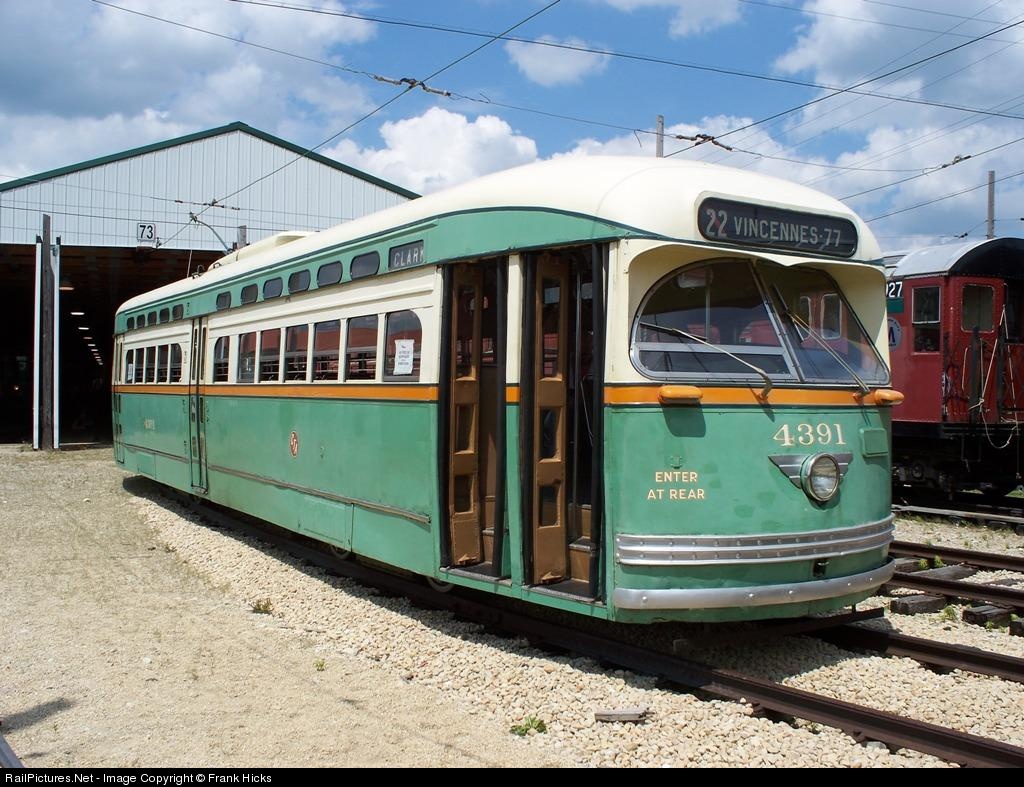
    All the nifty features aside, I still kind of miss the old 6000 Series cars of my childhood, many of whom were built from parts taken from the beautiful, discarded Green Hornet streetcars. I still fondly remember riding the classic Chicago L cars in the subway in summertime with all the windows wide open, where the sound level was several decibels above the threshold of pain. And no one had a portable electronic device for distraction.

    We were tougher back then.

Post Title

Straphangers


Post URL

https://guidice-galleries.blogspot.com/2011/04/straphangers.html


Visit guidice galleries for Daily Updated Wedding Dresses Collection

A case for the taking the bus...

    ...from the Urbanophile.

    I used to love to take the bus. When I lived in Oak Park, I'd often walk from the Loop to North Avenue and take the #64 bus all the way home rather than take the L. The whole commute would take about 2.5 hours but I found the walk plus the ride with its cast of characters inspiring and exhilarating.

    As a child, taking the bus was one of the joys in my life. My mother and I would regularly take the Armitage electric trolley bus to the Lincoln Park Zoo. Back then in addition to everything bus drivers do today, the driver would have to make change and punch transfers. I remember the mountain of chads at the feet of the driver by the time we got to our destination. Occasionally the trollies would jump off the overhead wires and the driver would have to get out of the bus and realign them. I'd always sit in the front seat if it was available and if I was lucky, get to talk to the driver.

    On our yearly vacations to Milwaukee, my grandparents and I would hop on the first bus that came along and ride to the end of the line and back. It was a fun kind of roulette because we never knew exactly where we would end up. The drivers were almost always friendly and went out of their way to accommodate us.

    But alas there's no time in my life anymore for such frivolity. Today I do almost anything to avoid taking the bus. Busses are just too few and far between, much of the time I feel as if I can get there faster by walking. Even when I do manage to catch a bus, I'm constantly fidgeting. A few weeks ago I needed to get from Hyde Park on the south side to Warren Park on the far north side for my son's baseball game. The ride involved three transfers, a bus to a train to another train to a bus. The first three rides covered 20 miles in about 50 minutes. The last bus ride, a 2 mile trip, took 30 minutes.

    Busses are clearly a much quicker fix for a city's transportation needs than light rail which is extravagantly more expensive to build and maintain. Plus, light rail systems are subject to most of the same traffic problems as busses. Perhaps bus only lanes or certain streets reserved for bus traffic during rush hour would help. Bus stops spread further apart and bus friendly timed traffic lights would reduce the frequency of stops.

    Contrary to what was written in the linked article, the cool factor will always heavily favor light rail (streetcars as they used to call them) over busses. And that will certainly help lure people from their automobiles.

    It's time to get creative, I see the future of transportation in Chicago and other like minded cities involving an expansion of the combination of innovative rail, light rail and bus systems, perhaps to the detriment of amenities for drivers.

    Which will be a good thing in the long run. Maybe then I'll gladly hop on the bus again.

Post Title

A case for the taking the bus...


Post URL

https://guidice-galleries.blogspot.com/2010/07/case-for-taking-bus.html


Visit guidice galleries for Daily Updated Wedding Dresses Collection

Chicago Rapid Transit

    The CTA last week announced plans to extend three of its existing rapid transit lines. The Red Line would be extended south to 130th Street. The Orange Line would be extended south to the Ford City Shopping Center. Finally the Yellow Line, formerly known as the Skokie Swift, would be extended north to just west of Old Orchard Shopping Center.

    From an extremely unscientific survey I made the other day judging from internet comments, it seems that the folks along the two south side lines welcomed the extensions while those up in Skokie for the most part opposed the project. This could be due to the fact that the Yellow Line extension would be built closer to existing homes and businesses while the other two lines would be built in relatively undeveloped areas. A couple of north siders even suggested that the Yellow Line extension would bring crime along with it.

    The haves vs. have nots factor could also account for the difference in attitude as the south side has traditionally been bereft of rapid transit service. The Red Line extension for the first time would extend the L all the way to the city's south limits. It would also hopefully be a shot in the arm for development along the transit corridor, as the construction of the elevated line to Howard Street a century ago was to the Edgewater and Rogers Park neighborhoods on the far north side. The same could be said for the Orange Line extension, although it would not extend to the city limits as would the Red Line.

    Another excellent post from the Urbanophile can be found here. It suggests that while these projects indeed have merit, they should be integrated into a far more comprehensive, Burnham, "make no little plans" style plan that would include major renovations and extensions, some practical, others perhaps not. The idea would be to bring the issue of public mass transportation to the forefront by including the entire city.

    I couldn't agree more. Big plans for the future of the city are a far more fitting tribute to the legacy of the Burnham Plan than the two insignificant temporary pavilions by (St)archchitects Zaha Hadid and Ben van Berkel which are currently on view at Millennium Park.

    I think the time is right to plan big in terms of public transportation in the city. In that vein I think the south side is the place to start by conceiving plans for a light rail system. If the Olympics come to Chicago, the opportunity will be right at our doorstep.

    Let's not drop the ball.

Post Title

Chicago Rapid Transit


Post URL

https://guidice-galleries.blogspot.com/2009/08/chicago-rapid-transit.html


Visit guidice galleries for Daily Updated Wedding Dresses Collection

Planes, trains and automobiles, continued

    A popular belief has it that there was a great conspiracy that took place in middle of the 20th Century that is directly responsible for the decline of public transportation in this country.

    That a conspiracy took place is not in doubt. Several corporations, GM, Firestone, Standard Oil of California, to name a few, created holding companies which in turn purchased several privately owned transit companies across the country. Then they dismantled the existing streetcar systems and replaced them with buses which use tires and run on gas. And guess who manufactured those products?

    The theory goes on to say that this dastardly act was an intentional effort to dismantle the transit industry and to set in motion the car culture that we are in today. Since buses as the theory goes are vastly inferior to streetcars, people became disillusioned and were forced into buying cars.

    The death of intercity train travel is also tied to the conspiracy, although I can't figure out exactly how.

    You can read about it in an unusually biased Wikipedia article here.

    While the article lists many of the consequences of car culture that I've been lamenting, its cause and effect scenario leaves much to be desired.

    It is certainly tempting to place the blame on corporation scoundrels secretly colluding to bring down public transportation in favor of the automobile for their own nefarious ends. While the companies in question profited illegally in what was unquestionably a conflict of interest, I think we're giving them way too much credit for intentionally destroying public transit in favor of the automobile.

    I have no doubt that the change was inevitable and would have happened with or without the help of the corporations.

    At the center of the storm is the streetcar. Today we look at them with wonderment, nostalgia for those old enough to remember them, and a missed opportunity given the fact that the infrastructure that once supported them is gone. We think of them as efficient, non-polluting alternatives to the city bus, which is considered by many only a last resort means of transportation.

    The truth is that streetcars, at least as they existed until the late 1950s when they all but vanished from the American scene, had many of the disadvantages of buses, and in fact had a few disadvantages all their own.

    • Streetcar tracks were usually integrated into the street so they were affected by traffic just as buses.
    • The breakdown of a single car forced the shutdown of the entire line as a broken down vehicle blocked all traffic behind it.
    • As streetcars operated in the middle of streets, passengers faced greater hazards as they boarded and exited as opposed to buses where passengers board and exit from the relative safety of the curb.
    • While the electric powered streetcar itself did not produce exhaust, the generators that produced electricity to power the cars certainly did introduce pollutants into the atmosphere.
    • The construction and upkeep of the infrastructure for streetcars is hugely expensive compared to that for city buses.
    There were many reasons that made buses attractive to transportation companies, flexibility, fewer operators necessary to run them, passenger comfort, the list goes on and on. By the time streetcars disappeared, they were considered a relic of the past, outmoded, and inefficient.

    It seems logical that as the writing was on the wall, the evil auto related companies saw an opportunity to sell buses, tires and gas. Nothing less nothing more.

    But wait there's more...

    Running a public transportation system was never a very profitable enterprise, in fact by mid-century the private companies that once owned and operated the transportation systems around the country were all absorbed into public transportation authorities run by local governments.

    The same is true for passenger trains. Even during the golden age of American rail travel, the 1920s through the 50s, passenger service was at best a break even proposition. The railways saw passenger service as necessary public relations for investors. The real money was in freight.

    By the 1960s passenger service became far less than break even and the railroads couldn't abandon it quickly enough. Amtrak was formed by the federal government to preserve a modicum of passenger rail service in the States, certainly not to monopolize it as the Wikipedia article suggests.

    There are many reasons for the decline of passenger trains, one of which is the rise of the airline industry which made long distance train travel seem ridiculously impractical. But it was the automobile that did the most damage.

    Perhaps the biggest blow to the passenger train in the United States was the implementation of the Federal Interstate highway system that began during the Eisenhower administration. While inter-state highways already existed, (think of the famous Route 66), the Interstates took driving into new and unimagined territory. Where a long distance drive was once an adventure with many unexpected twists and turns, the Interstates insured that every mile of highway would be consistent, predictable, and above all safe, or as safe as high speed auto travel could possibly be.

    As long as gas was cheap, the convenience and freedom of driving made travel by car much more attractive and economical than train travel, especially for trips under 300 miles or so.

    Today gas is no longer cheap, but old habits are hard to break and the die has been cast. So where do we go from here?

    Believe it or not, I'm going to advocate, are you ready for this...

    bringing back the streetcar!

    But more on that later...

Post Title

Planes, trains and automobiles, continued


Post URL

https://guidice-galleries.blogspot.com/2009/06/planes-trains-and-automobiles-continued.html


Visit guidice galleries for Daily Updated Wedding Dresses Collection

Planes, trains and automobiles...

    I am a huge fan of trains, els, subways, streetcars, cable cars, basically any kind of people-moving object that sets its wheels to tracks. To me they embody the very essence of the urban experience.

    Hang over the platform of a Powell-Hyde cable car slowly making its way up Russian Hill on a lovely San Francisco evening and you will agree with me. Ride aboard the toy-like trams that navigate the Ringstrasse in Vienna. Walk around America's grandest public space, Grand Central Terminal at rush hour and watch the commuters darting around trying to catch the early train home to Connecticut or Long Island. Descend into the depths Moscow's Metro and experience the most beautiful subway in the world. Or ride the L through the Loop.

    If someone gave me the opportunity to design a city from scratch (heaven forbid!), it would be filled to the brim with all kinds of railed people movers, streets for automobiles would be an afterthought.

    The blog post from Rochester, N.Y. that I brought up earlier brings to mind so many issues about what is wrong, not only with with the way our cities are designed, but what's wrong with us as well. The movement to design cities to serve the automobile instead of the other way around has created a mindset that the car is essential to any normal kind of life. And we embrace that notion wholeheartedly.

    I'm as guilty as anyone. While we live in a city that has adequate public transportation, I love my car and life without it would be a tremendous burden for my family and me. Even though my daily commute hardly ever involves the car, grocery shopping, weekend outings, vacations, all revolve around the four wheeled beast. Take it away and things get, interesting. But still possible.

    The same cannot be said for virtually anywhere else in the States, save for other big cities. This issue was brought home to me several years ago. My parents after retirement moved to the Phoenix area. My dad didn't feel comfortable driving after his second stroke so my mom did all the driving. Typically she would put 60 to 80 miles per day on the car just getting about town. After my father's final illness and death, my mother developed macular degeneration which rendered her legally blind. Ironically, in her community which consisted primarily of retired people, there were absolutely no accomodations for people without cars. Even delivery at the local supermarket was completely unheard of. While her friends were extremely helpful and bent over backwards to help, for my mother, being a fiercely independent person, losing the ability to drive made her feel helpless. So she moved the heck out of there, back to Chicago where she now leads a perfectly independent life.

    I'm going to talk more about cars and what to do about them in the next few posts but right now I'm going to bed, good night!

Post Title

Planes, trains and automobiles...


Post URL

https://guidice-galleries.blogspot.com/2009/06/planes-trains-and-automobiles.html


Visit guidice galleries for Daily Updated Wedding Dresses Collection

Popular Posts

My Blog List