Kochi Castle is a castle located in Kochi, Kochi Prefecture, Japan. Next to the Battle of Sekigahara in 1600 Kochi Castle was constructed in what was then the province of Tosa. It was built by Yamanouchi Kazutoyo who took control of the province after the Tokugawa victory. The castle was constructed as part of the move from Urado to the more defensible Otakasa area. The details of Kochi Castle are explained in world tour guides below.
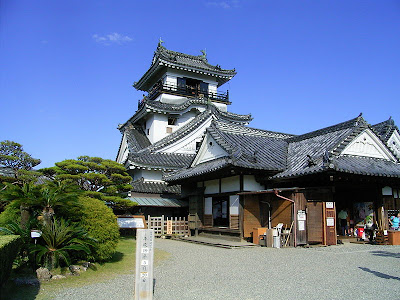 The construction of Kochi Castle was begun in 1601 and was completed in 1611. Much of original fortress burned down in 1727. It was reconstructed between 1729 and 1753 in original style. The castle underwent major restoration from 1948 to 1959. Though no battles were fought at castle it is remarkable because castle is the original structure and not a post war replica. It is also the only castle in Japan to retain both its original tenshu or keep and its palace. In fact, it is the only castle to have all the original buildings in the honmaru or innermost ring of defense, still standing.
Two previous attempts were made to build castles on Otakasa Hill. Both failed. The first attempt was by Otakasa Matsuomaru sometime during the late Heian or Kamakura periods. The second was in 1588 by the conqueror of Shikoku Chosokabe Motochika. The area around the hill at this time was extremely swampy due to the influx of alluvial sediments from the Kagami River. Consequently, previous builders were never successful in establishing a permanent fortress on the site where Kochi Castle stands today.
As one of only twelve intact castles in Japan, Kochi Castle was popularly called a National Treasure before the 1950 National Treasure Protection Law was enacted. After the law was passed, it was demoted to the status of Important Cultural Asset. Kochi Castle can be seen in the background of the animated film I Can Hear the Sea by Studio Ghibli during the class reunion scene. The castle figures prominently in the film The Harimaya Bridge. Key scenes in the movie take place in the courtyard just inside the Oteman Gate on the top level of the castle itself, and at the entrance to the castle grounds just outside the Oteman Gate.
Two rivers, the Kagami River and the Enokuchi River, form the outer moat of the castle. The tower is five stories high and sits atop Otakasa Hill, commanding an extensive view of the city. It rises above the Kaitokukan palace which was constructed in the Shoin style of the Edo period. The castle retains this structure today and has been fitted with period-appropriate items in the lower rooms. In addition to a tearoom, Genkan entrance area and latrine the Kaitokukan contains eight traditional rooms, ranging in size from three to twelve tatami. It is surrounded by a veranda on the east and south sides. The Kaitokukan also burned during the fire of 1727, but it was not repaired until 1747, with work completed in 1749.

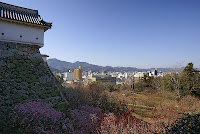 Kochi Castle is located in downtown Kochi. The main entrance is directly across from the west entrance of the Obiyamachi shopping area. Visitors are asked to remove their footwear before entering the building. Slippers are provided. As the castle is quite old, the tatami rooms are visible but not accessible. There is a small museum area with information entirely in Japanese. This museum houses several cultural artifacts of the Tosa region not native to the castle itself.
The upper rooms of the tower are all empty, but visitors are allowed to climb to the top. There is a railing but no net around the balcony. Handicap access is extremely limited as the approach to the castle involves many steps. There is no elevator. The castle grounds are now a public park, and a popular location in spring for hanami. They contain the Prefectural Library and the Kochi Literary Museum, in addition to statues of notable scions of the Yamanouchi family.
 The construction of Kochi Castle was begun in 1601 and was completed in 1611. Much of original fortress burned down in 1727. It was reconstructed between 1729 and 1753 in original style. The castle underwent major restoration from 1948 to 1959. Though no battles were fought at castle it is remarkable because castle is the original structure and not a post war replica. It is also the only castle in Japan to retain both its original tenshu or keep and its palace. In fact, it is the only castle to have all the original buildings in the honmaru or innermost ring of defense, still standing.
Two previous attempts were made to build castles on Otakasa Hill. Both failed. The first attempt was by Otakasa Matsuomaru sometime during the late Heian or Kamakura periods. The second was in 1588 by the conqueror of Shikoku Chosokabe Motochika. The area around the hill at this time was extremely swampy due to the influx of alluvial sediments from the Kagami River. Consequently, previous builders were never successful in establishing a permanent fortress on the site where Kochi Castle stands today.
As one of only twelve intact castles in Japan, Kochi Castle was popularly called a National Treasure before the 1950 National Treasure Protection Law was enacted. After the law was passed, it was demoted to the status of Important Cultural Asset. Kochi Castle can be seen in the background of the animated film I Can Hear the Sea by Studio Ghibli during the class reunion scene. The castle figures prominently in the film The Harimaya Bridge. Key scenes in the movie take place in the courtyard just inside the Oteman Gate on the top level of the castle itself, and at the entrance to the castle grounds just outside the Oteman Gate.
Two rivers, the Kagami River and the Enokuchi River, form the outer moat of the castle. The tower is five stories high and sits atop Otakasa Hill, commanding an extensive view of the city. It rises above the Kaitokukan palace which was constructed in the Shoin style of the Edo period. The castle retains this structure today and has been fitted with period-appropriate items in the lower rooms. In addition to a tearoom, Genkan entrance area and latrine the Kaitokukan contains eight traditional rooms, ranging in size from three to twelve tatami. It is surrounded by a veranda on the east and south sides. The Kaitokukan also burned during the fire of 1727, but it was not repaired until 1747, with work completed in 1749.

 Kochi Castle is located in downtown Kochi. The main entrance is directly across from the west entrance of the Obiyamachi shopping area. Visitors are asked to remove their footwear before entering the building. Slippers are provided. As the castle is quite old, the tatami rooms are visible but not accessible. There is a small museum area with information entirely in Japanese. This museum houses several cultural artifacts of the Tosa region not native to the castle itself.
The upper rooms of the tower are all empty, but visitors are allowed to climb to the top. There is a railing but no net around the balcony. Handicap access is extremely limited as the approach to the castle involves many steps. There is no elevator. The castle grounds are now a public park, and a popular location in spring for hanami. They contain the Prefectural Library and the Kochi Literary Museum, in addition to statues of notable scions of the Yamanouchi family.
Post Title
→Kochi Castle in Japan
Post URL
→https://guidice-galleries.blogspot.com/2010/08/kochi-castle-in-japan.html
Visit guidice galleries for Daily Updated Wedding Dresses Collection


